


 English
 Español
 عربى
عربى
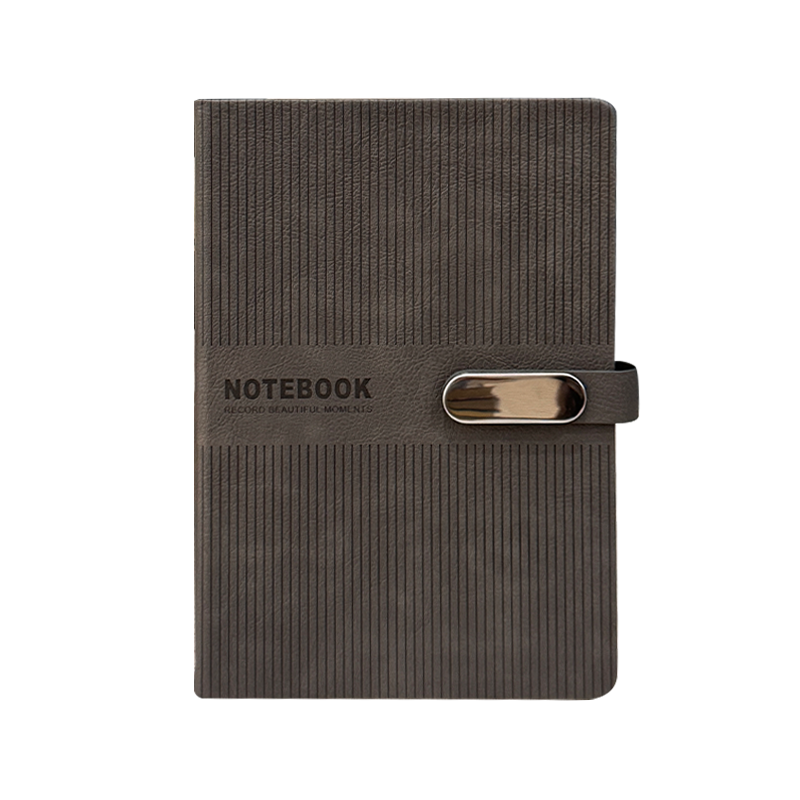
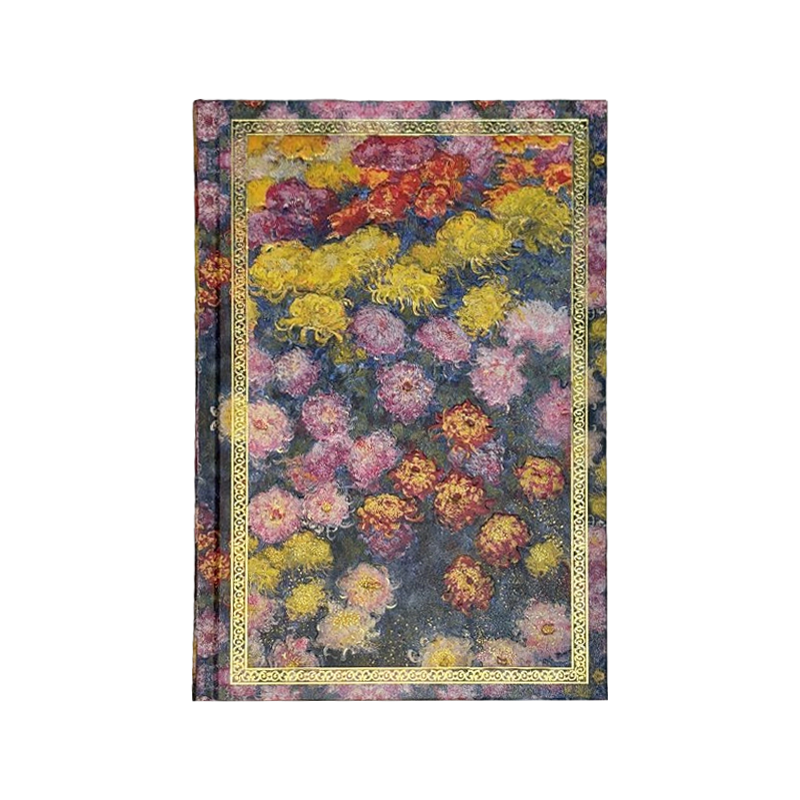
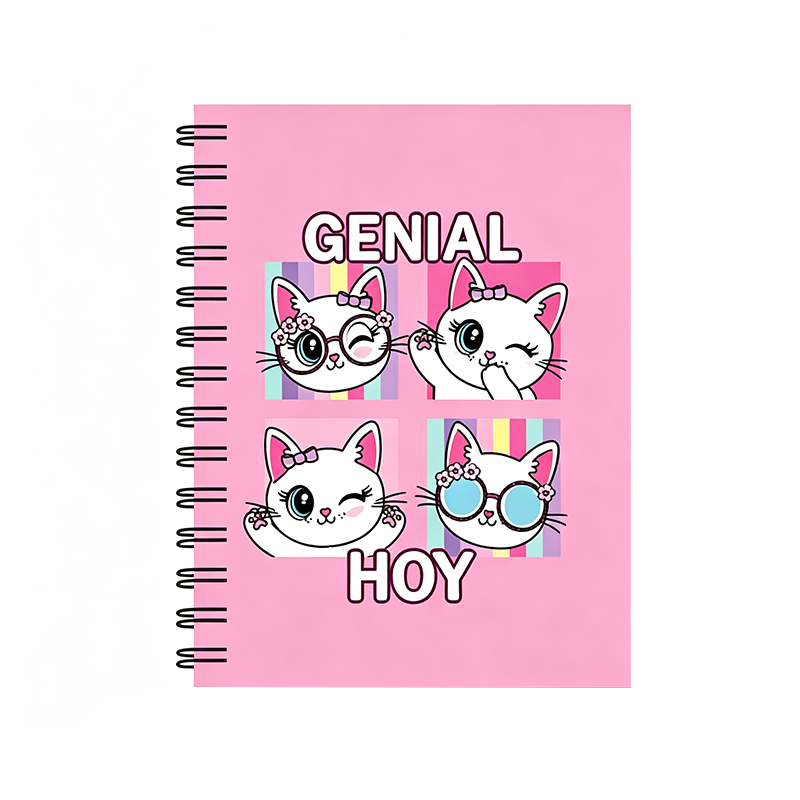
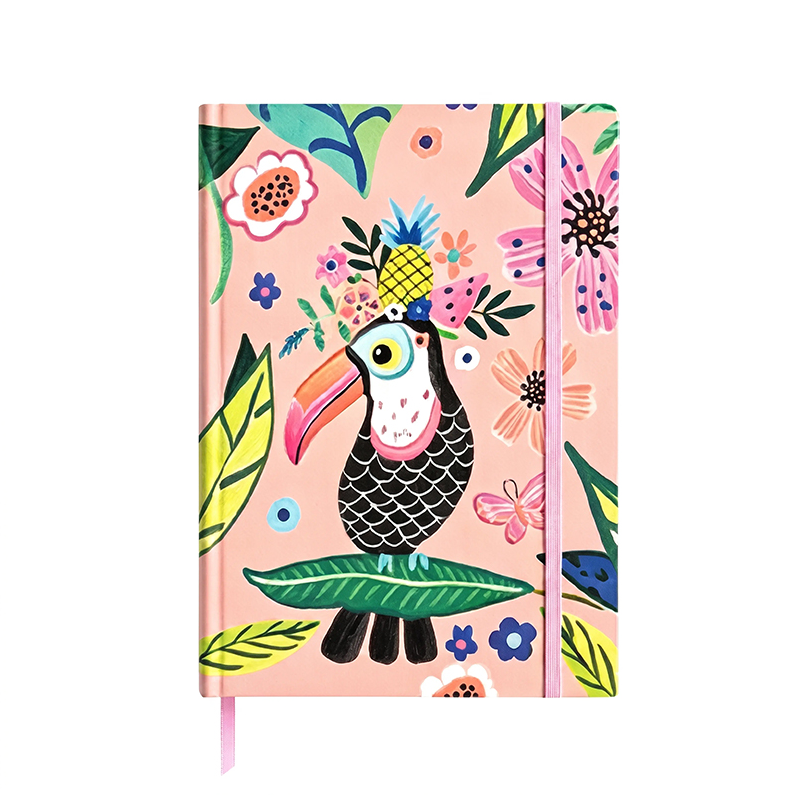
Comb binding and spiral binding both produce documents that lie flat, but they are built for different habits. Choose comb binding when you need to add, remove, or rearrange pages after the document is finished; choose spiral binding when ...
READ MORE
Spiral Notebooks Manufacturers
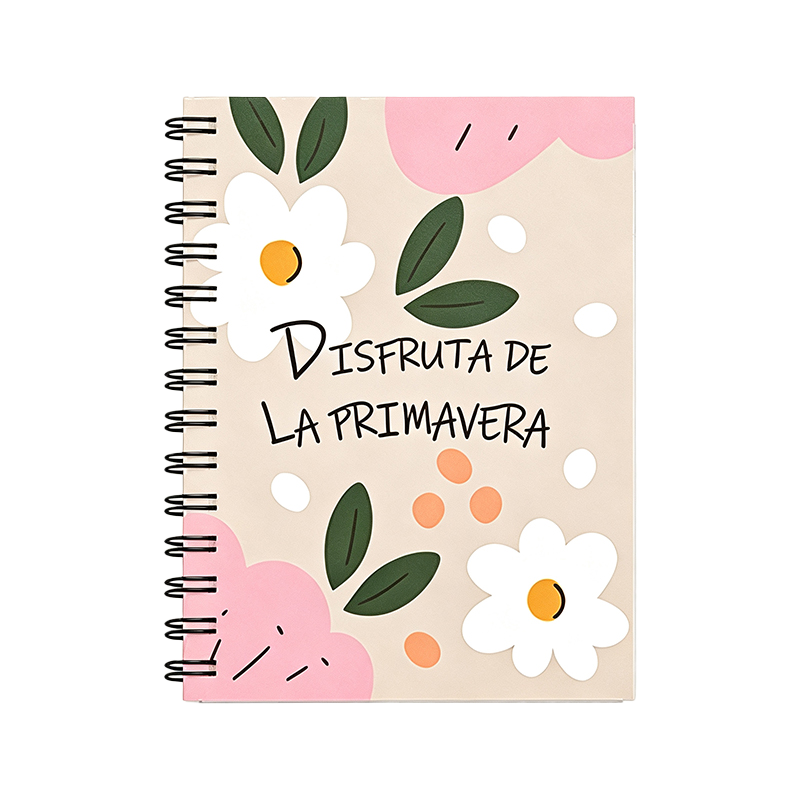
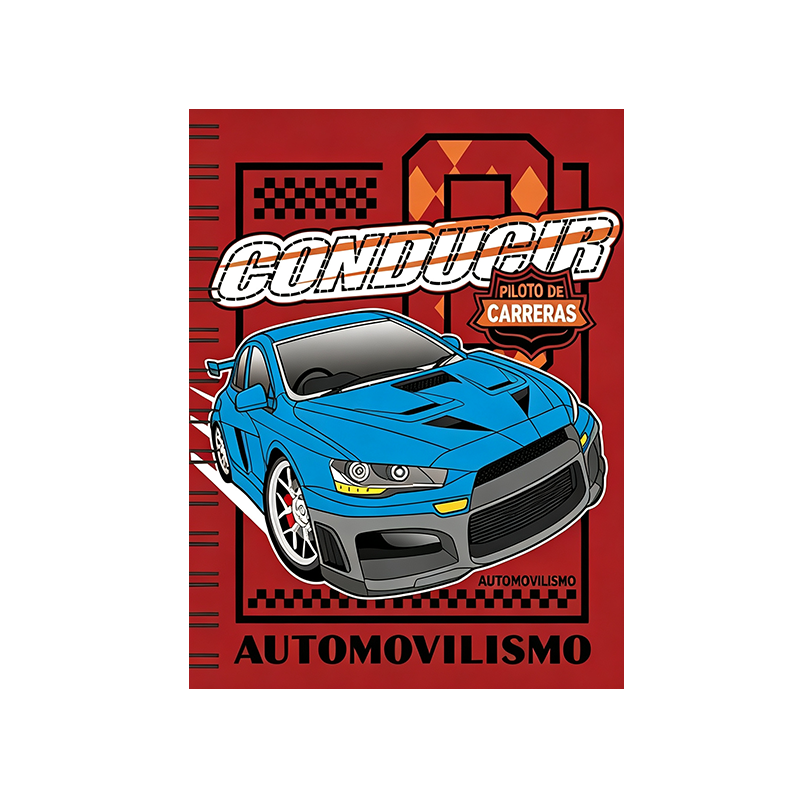
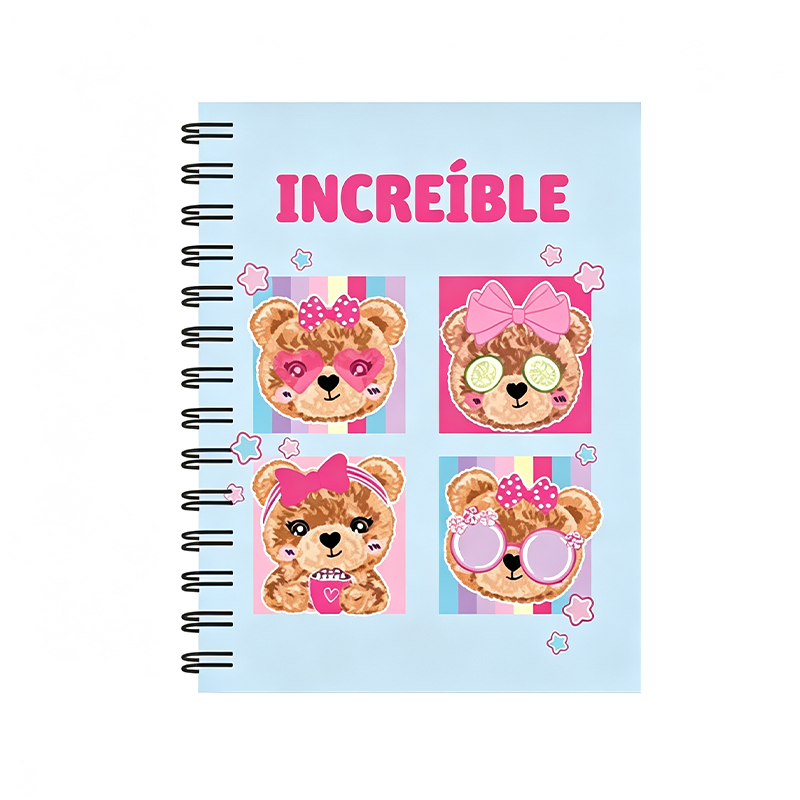
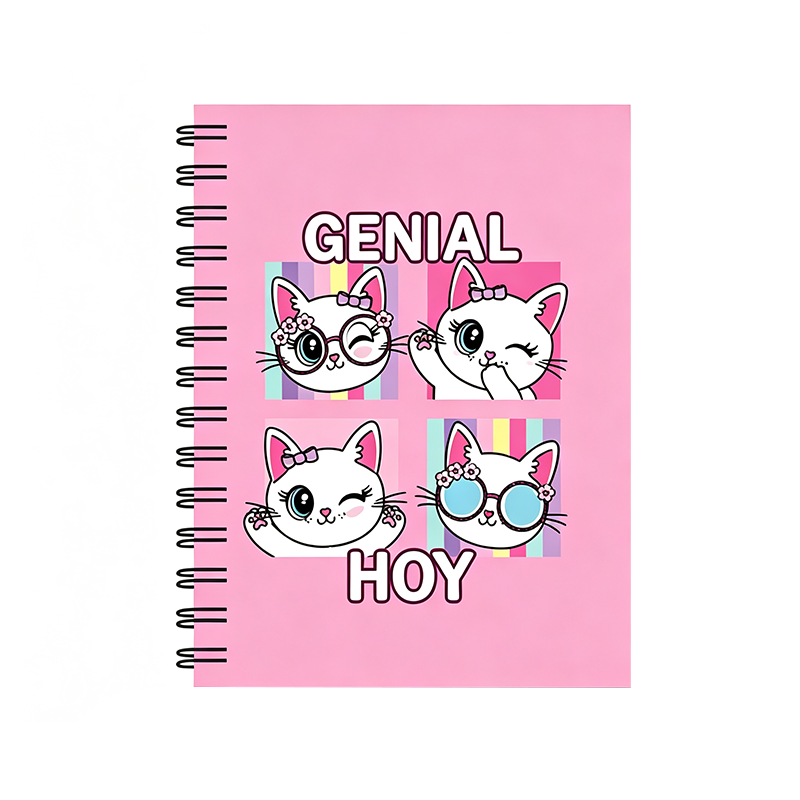
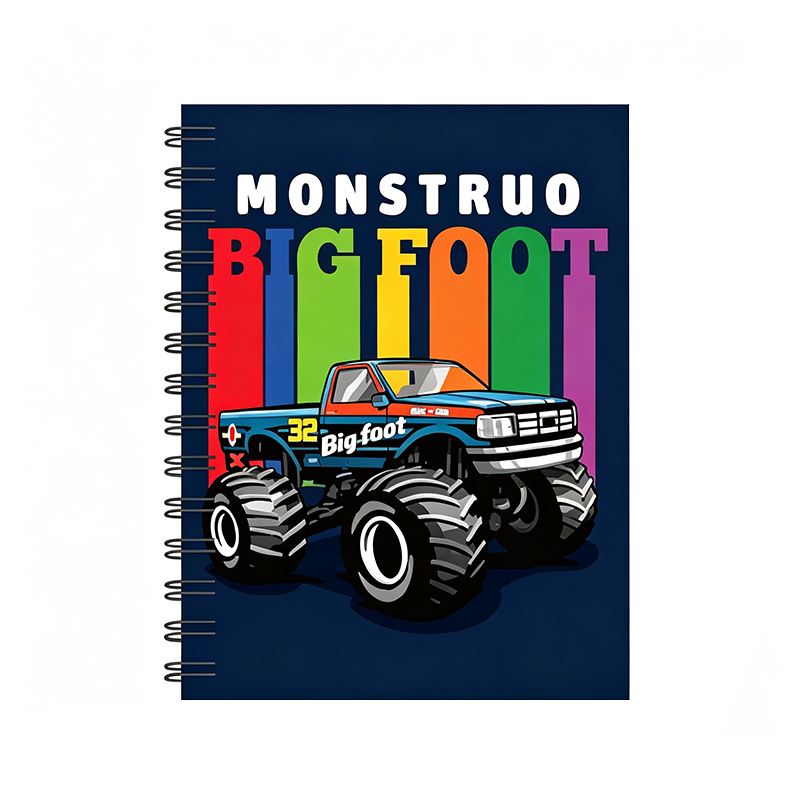
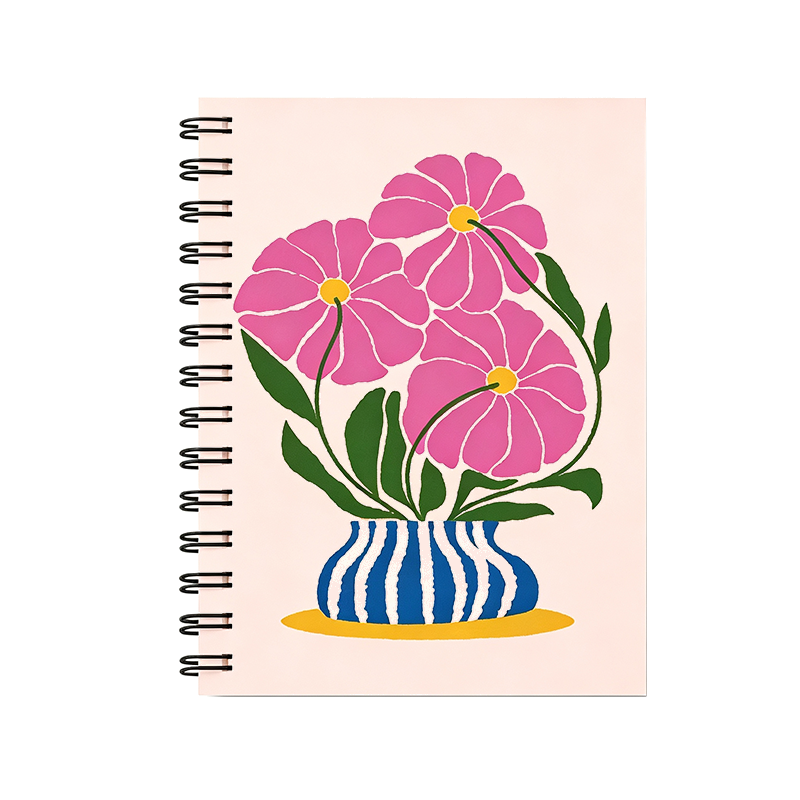
We manufacture Spiral Notebooks for stationery brands, wholesalers, distributors, retailers, educational suppliers, office-supply businesses, and promotional product companies. Our spiral notebook production is suitable for both individual products and larger stationery collections, with OEM and ODM services available for different market and purchasing requirements.
For OEM projects, we can manufacture according to your existing artwork, samples, product specifications, or brand requirements. For ODM projects, we can develop the notebook structure and overall product concept based on your intended application, target market, and product positioning. We can also coordinate different designs and product variations within the same wholesale program.
- A4 Hardcover Spiral Coil Notebook with Grid & Ruled Pages
- A4 Spiral Bound Notebook with Custom Printed Cover
- Animal Print A4 Hardcover Spiral Coil Notebook
- A5 Hardcover Spiral Notebook with Cute Cat Covers
- A4 Hardcover Spiral Graph Paper Notebook
- A4 Hardcover Spiral Ruled Notebook
Specifications & Customization
| Customization | Available Options |
|---|---|
| Size | A4, A5, A6, B5, Custom Size |
| Cover Material | Art Paper, Kraft Paper, PU Leather, PP, PVC, and other suitable materials |
| Inner Paper | White Paper, Cream Paper, Recycled Paper, and other paper types, with customizable GSM |
| Page Layout | Blank, Ruled, Grid, Custom Layout; different inner page types can be combined in one notebook |
| Page Count | Determined based on product structure and usage requirements |
| Coil / Binding | Spiral Binding, with coil specification confirmed by size, page count, and structure |
| Printing | Offset Printing, Digital Printing, Screen Printing, and other suitable methods |
| Cover Finish | Foil Stamping, Embossing, Debossing, Lamination, etc. |
| Accessories | Elastic Band, Pen Loop, Ribbon Bookmark, etc. |
| Packaging | Polybag, Retail Packaging, Bulk Packaging, etc. |
Cover Printing
The cover material decides which printing method works best. For PP and PVC covers, whether Screen Printing or another method is suitable is assessed based on the product structure.
FAQ
QWhat types of Notebooks do you produce?
We offer Hardcover Notebooks, Softcover Notebooks, PU Leather Notebooks, Paper-Covered Notebooks, Spiral Notebooks, Strap-Closure Notebooks, and Custom Journals, with the structure and material selected according to different product positioning.
QCan the inner pages of a Notebook be developed according to different usage needs?
Yes. In addition to standard Blank, Ruled, and Grid Pages, Printed Interior Pages, Page Count, Paper Type, and Paper GSM can also be customized according to project requirements, suitable for different writing, recording, and branding needs.
QCan the cover structure of a Notebook be customized?
Yes. The cover can use Hardcover, Softcover, or other suitable structures depending on product positioning, and can be developed together with Cover Material, Thickness, Closure, and Accessories.
QCan special features be added to a Notebook?
Yes. Depending on the product structure, functional elements such as a Ribbon Bookmark, Pen Loop, Elastic Band, Strap Closure, Magnetic Closure, or Clasp can be added.
QCan different Notebooks use different binding methods?
Yes. Depending on the page count, cover structure, and product form, binding methods such as Case Binding, Sewn Binding, Perfect Binding, or Spiral Binding can be selected.
QCan Notebooks be made into a premium gift series?
Yes. Corporate Gift Notebooks, Premium Notebooks, and Notebook Gift Sets can be configured with PU Leather, Specialty Paper, Foil Stamping, Embossing, Edge Painting, Gift Box, and other combinations.
QCan corporate custom Notebooks with a brand logo be produced?
Yes. The logo can be applied to the cover, inner pages, and related packaging, and can be paired with Foil Stamping, Embossing, Debossing, Printing, and other finishes according to brand requirements.
QCan Notebook colors be developed according to brand requirements?
Yes. Cover color, inner page color, and some accessories can be confirmed based on the specific material and product structure. For branded projects, matching can also be done according to the color reference you provide.
QCan Notebooks in different specifications be made for different markets?
Yes. Different markets or sales channels can use different Sizes, Page Counts, Cover Materials, Interior Layouts, and Packaging, with specifications confirmed separately for each product line.
QCan a Notebook be combined with other products into a gift set?
Yes. Notebooks can be combined with Gift Boxes, Paper Gift Bags, Wrapping Paper, Greeting Cards, and other products for Corporate Gifts, Promotional Products, Holiday Gifting, and other projects.
QCan a similar product be developed based on an existing Notebook?
Yes. You can provide an Existing Sample, and we can assess production based on the existing product's Size, Cover, Interior Paper, Binding, Finishing, and Accessories, adjusting the specifications as needed.
QIf I only have a product concept for a Notebook, where should I start?
You can start by providing the intended use, reference images, target size, estimated quantity, or a basic design direction. We will confirm the product structure, materials, and any other specifications that still need to be determined based on the information provided.
QWhat is the MOQ for a Notebook?
MOQ is determined by the Notebook type, size, material, degree of customization, and quantity required. The MOQ may vary between different products and designs, and is confirmed based on the project specifications and quotation.
QWhat sample forms are available for a Notebook?
Depending on the project requirements, we can provide a Digital Sample, Prototype, Physical Sample, Pre-production Sample, or Existing Product Sample. The specific sample form depends on the product structure and customization requirements.
OEM / ODM Customization Services
We provide OEM and ODM customization services for Notebooks, Journals, Paper Gift Bags, Gift Boxes, Wrapping Paper, and other paper products and packaging, customized according to your Artwork, product specifications, target market, and packaging requirements.
OEM
You provide the design file, Artwork, or product specifications, and we produce according to the confirmed requirements.
ODM
You provide the product concept, reference images, or basic requirements, and we assist with product structure, material selection, customization plan, sampling, and production development.
OEM / ODM Service Process
- 01Customer Artwork Production
- 02Existing Product Customization
- 03New Product Development
- 04Structure Optimization
- 05Prototype Development
- 06Sample Production
- 07Pre-production Approval
- 08Mass Production
Yiwu Hosie Crafts Co., Ltd.
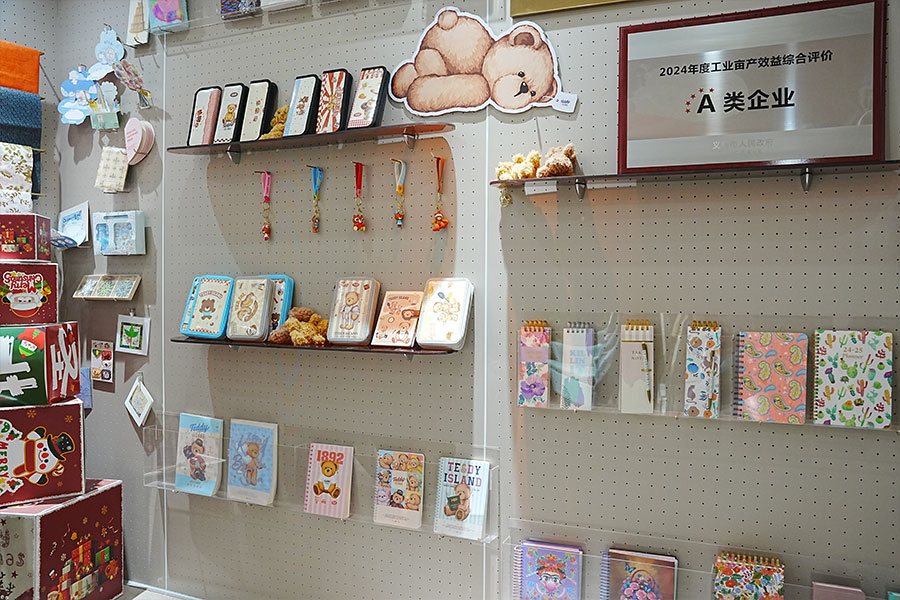
Established in 2014, Yiwu Hosie Crafts Co., Ltd. is a professional paper product source manufacturer specializing in custom gift paper bags, deluxe gift boxes, greeting cards, PU leather-bound notebooks, and creative notebooks, with support for custom development based on client drawings and samples.
As a professional China bulk spiral notebook manufacturer and direct spiral notebook factory, we have the capacity to handle bulk orders. Our factory is equipped with Heidelberg presses and fully automated post-press lines, enabling integrated production from printing to finished goods. We support OEM/ODM customization, direct factory supply, and bulk orders to meet the procurement needs of different brands and wholesalers.
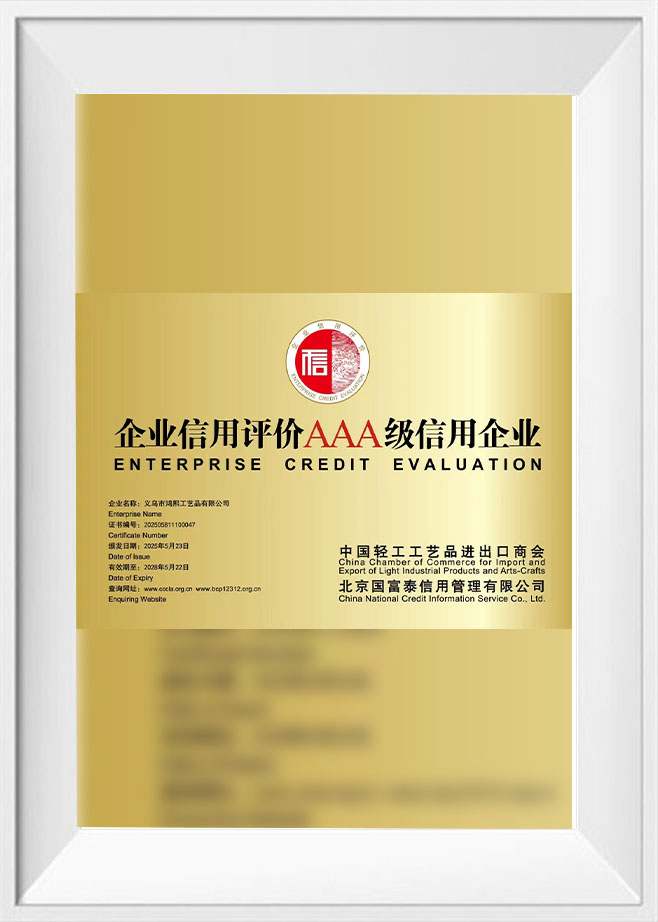
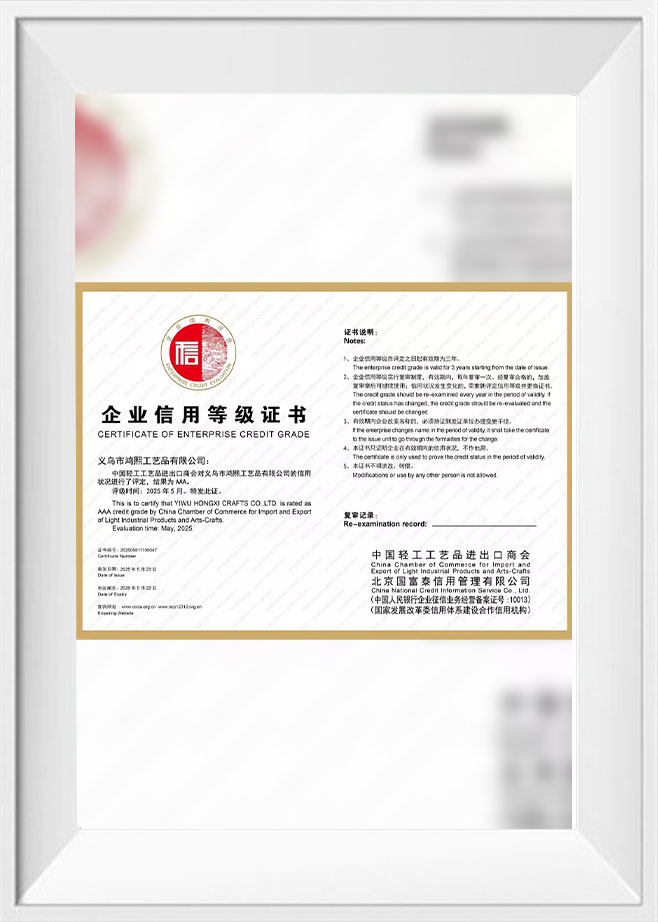
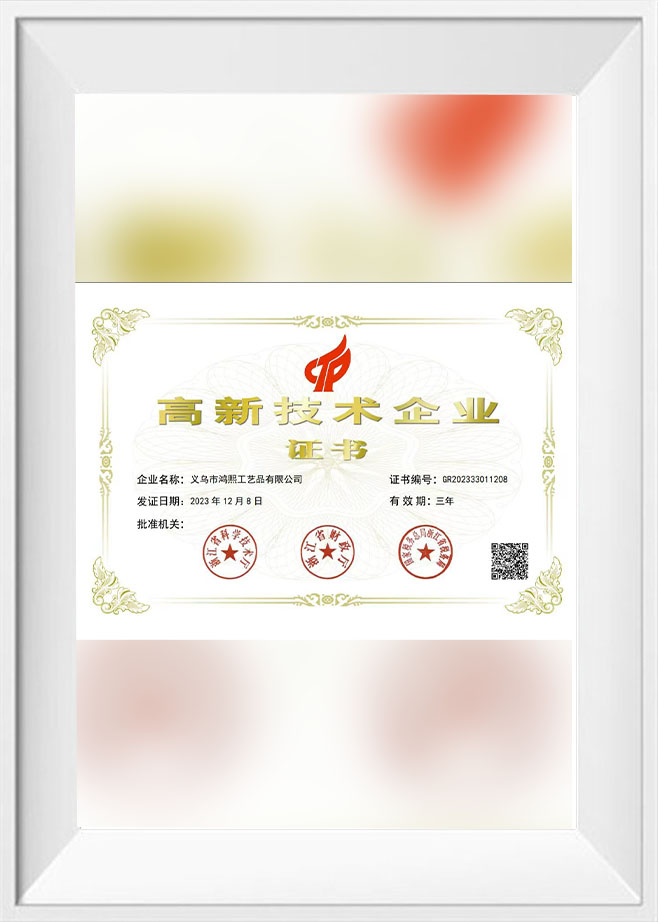
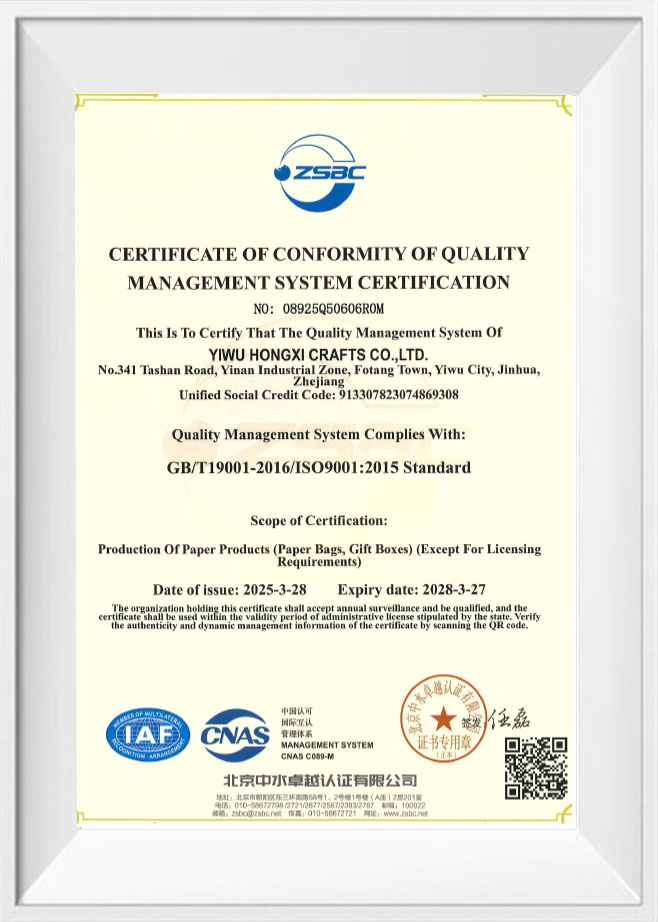
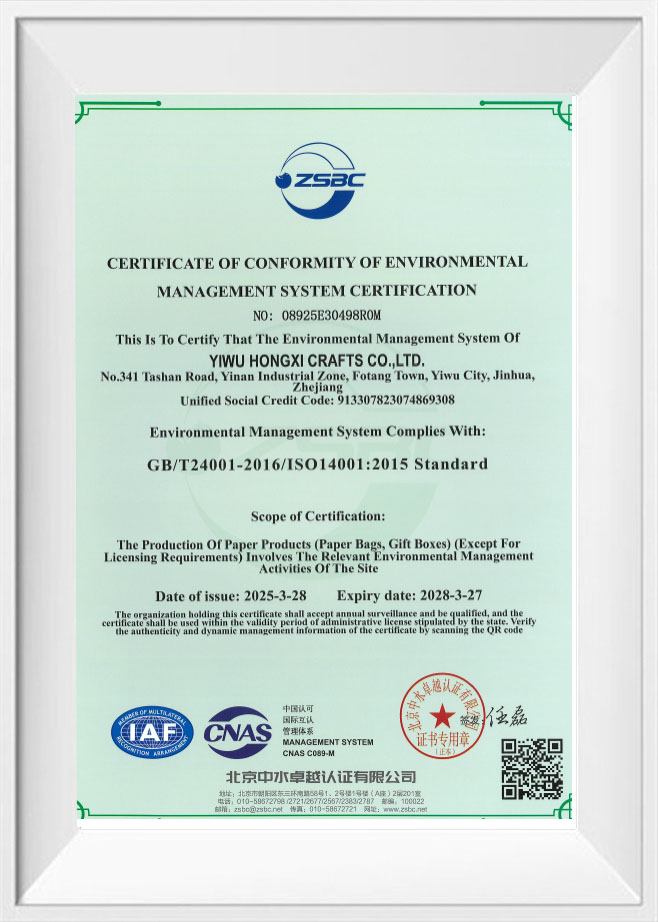
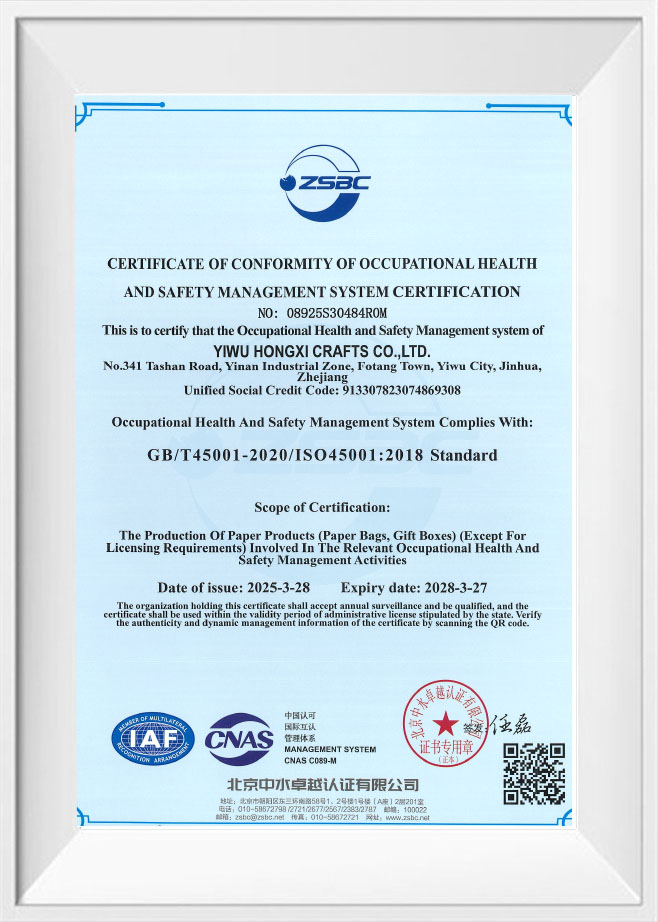
Our products are exported to Asia, the Americas, and Europe, serving renowned international brands including MINISO, DAISO, and American Greetings. Hosie holds ISO triple certifications and amfori-BSCI accreditation, committed to delivering high-quality, sustainable packaging solutions to global clients.
As a professional China bulk spiral notebook manufacturer and direct spiral notebook factory, we have the capacity to handle bulk orders. Our factory is equipped with Heidelberg presses and fully automated post-press lines, enabling integrated production from printing to finished goods. We support OEM/ODM customization, direct factory supply, and bulk orders to meet the procurement needs of different brands and wholesalers.
Our products are exported to Asia, the Americas, and Europe, serving renowned international brands including MINISO, DAISO, and American Greetings. Hosie holds ISO triple certifications and amfori-BSCI accreditation, committed to delivering high-quality, sustainable packaging solutions to global clients.
- 80,000sqm production facility
- 400+employees
- 10Heidelberg printing machines
- 20,000Notebook daily capacity, up to
- 150,000Gift Bag daily capacity, up to
Our Production & Ordering Process
01Requirement Confirmation
- Product type
- Reference images
- Existing sample
- Artwork / Logo
- Size
- Material
- Estimated quantity
- Packaging requirements
- Target market
- Required delivery date
02Artwork / Specification Review
- Product structure
- Size
- Materials
- Paper GSM
- Printing
- Binding
- Finishing
- Accessories
- Packaging
03Sample Production
- Prototype
- Digital Sample
- Physical Sample
- Pre-production Sample
04Sample Approval
- Size
- Structure
- Color
- Material
- Printing
- Finishing
- Binding
- Accessories
- Packaging
05Mass Production
- Material Preparation
- Printing
- Processing
- Assembly
- Finishing
- Inspection
06Quality Inspection
- Appearance
- Dimensions
- Printing
- Structure
- Binding
- Finishing
- Quantity
- Packaging
07Packaging & Shipment
- Individual Packaging
- Retail Packaging
- Bulk Packaging
- Carton Packing
- Custom Labels
- Barcode / SKU
- Carton Marking
02Artwork dimensions, Bleed, Color mode, Resolution, Die-cut requirements, and Printing feasibility are confirmed at the same time.
Information Buyers Care About
MOQ
Our MOQ varies depending on the product and customization requirements. Please provide your product specifications and target quantity so we can confirm the MOQ and quotation for your specific project.
Sample Availability
Depending on the product and project requirements, we can provide samples before bulk production. Sample types include:
- Digital sample
- Prototype
- Physical sample
- Pre-production sample
- Existing product sample
- Custom sample based on customer artwork or reference
Sample cost and lead time depend on the product structure, material, printing, and finishing requirements. For custom projects, bulk production can be arranged according to the confirmed specifications or the confirmed sample.
Sample Lead Time
Depends on the product structure, material, printing, and finishing requirements.
Mass Production Lead Time
The production lead time is project-specific and will be confirmed in the quotation and production schedule. For repeat sourcing projects, previously confirmed specifications and production files can help simplify the ordering process.
Packaging Options
- Individual polybag
- OPP bag
- Paper sleeve
- Individual gift box
- Retail packaging
- Custom labels
- Barcode / SKU labels
- Bulk packing
- Inner cartons
- Export cartons
- Custom carton markings
Specific packaging specifications can be discussed and confirmed based on your retail, warehousing, and shipping requirements.
Payment Terms
Payment terms will be confirmed in the quotation and sales contract according to the order and project requirements.
Trade Terms / Shipping Terms
Depending on the project, different international trade terms can be negotiated, such as EXW, FOB, CIF, DAP, or others depending on project requirements. The applicable trade terms need to be confirmed based on the destination, order quantity, and shipping requirements.
Quality Control Process
- Incoming Material Inspection
- Printing Inspection
- In-Process Inspection
- Finishing Inspection
- Final Product Inspection
- Packing Inspection
- Pre-Shipment Inspection
Our Manufacturing Process
- 01Material Selection
- 02Pre-Press & Artwork Review
- 03Printing
- 04Paper Processing
- 05Product Assembly
- 06Binding / Bag Making / Box Making
- 07Surface Finishing
- 08Quality Inspection
- 09Packaging
- 10Shipment
Certificate Of Honor
News
-
-
Ruled paper is paper printed with evenly spaced guide lines, usually horizontal, that help you write in straight, even rows. It is also called lined paper, and when the lines are pale it is often called feint-ruled paper. What changes fr...
READ MORE -
To make a gift bag with wrapping paper, cut a rectangle sized to your gift, fold a hem along the top edge, glue the sides into a tube, crease the side gussets, fold and glue the base flat, then punch holes and thread handles through. The...
READ MORE
Spiral Notebooks Industry knowledge
Yiwu Hosie Crafts Co., Ltd. is a Spiral Notebooks manufacturer based in Yiwu, Zhejiang Province, China. We produce coil-bound and wire-bound notebooks for stationery brands, wholesalers, distributors, retailers, educational suppliers, office-supply businesses and promotional product companies, and we run OEM and ODM programs that start either from confirmed artwork or from a concept, reference image or existing sample.
Spiral notebooks sit inside our wider Notebooks range alongside PU Leather Notebooks, paper-covered and strap-closure styles, and our Custom Paper Bag lines, so one retail or gifting program can be built across several paper products inside the same production flow.
Our Spiral Notebook Range and Product Positioning
The range is built around punched-and-coiled construction, which lets every page rotate around the binding axis so the notebook lies flat on a desk and folds fully back on itself. Structure, cover material and interior layout are selected per project rather than fixed to one template.
- Hardcover spiral notebooks — rigid board cover wrapped in printed art paper or specialty paper, coil bound, positioned for retail and gift programs.
- Softcover spiral notebooks — flexible paper, PP or PVC cover for lighter, high-volume school and office lines.
- Wire-O (twin-loop) notebooks — metal wire through rectangular holes, the professional presentation format for reports, planners and corporate books.
- Plastic coil notebooks — a continuous coil through round holes, suited to workbooks, exercise books and educational materials.
- Interior configurations — blank, ruled, grid or printed pages, with different page types combined inside one notebook.
- Functional accessories — elastic band, pen loop, ribbon bookmark, strap, magnetic or clasp closure where the structure allows.
Application Fit Across Retail, Education and Promotional Programs
Spiral binding is chosen when flat-lay writing, full page rotation and a low spine profile matter more than a rigid book block. That makes the format a natural fit for note-taking, coursework, field recording and branded giveaways.
- School and educational supply — standard formats around 8" x 10.5" to 8.5" x 11" and A5, commonly 70 to 100 sheets, ruled or grid interiors.
- Office and professional use — A4 and A5 wire-bound books with ruled or graph pages for meeting notes, planning and reference material.
- Retail chains and stationery brands — printed cover art, brand colour matching, individual packaging, barcode and SKU labelling.
- Promotional and corporate gifting — logo applied to cover, inner pages and packaging, combined with gift boxes and paper bags.
- Distributor and private-label programs — different sizes, page counts, cover materials and interiors confirmed separately for each market or sales channel.
Binding Systems: Coil, Wire-O and Flat-Lay Behaviour
Both binding families pass through holes punched along the binding edge, and both open flat. The difference is the binding element itself, the hole shape it requires and how each behaves under daily handling.
| Feature | Wire-O (twin-loop) | Spiral (coil) |
|---|---|---|
| Structure | Double loops of wire through rectangular holes | Single continuous coil through round holes |
| Page rotation | Opens flat, folds back | Opens flat, pages rotate 360 degrees |
| Durability | Metal wire holds shape under stress | Coil can stretch or snag over time |
| Typical use | Reports, planners, professional presentations | Notebooks, workbooks, educational materials |
| Coil specification | Pitch and wire diameter set by page count and thickness | Diameter and length confirmed by size, page count and structure |
Cover Materials, Inner Paper and Page Construction
Cover choice drives both the printing method and the perceived value of the finished notebook. Paper covers need enough rigidity to protect the interior without becoming bulky; a weight around 350 gsm is a common commercial reference point for covers that travel in a bag. Interior stock in the 70 to 90 gsm range is widely used where pen writing should not bleed through noticeably.
| Component | Options we produce | Selection notes |
|---|---|---|
| Cover material | Art paper, kraft paper, PU leather, PP, PVC and other suitable materials | Material determines which printing and finishing methods are viable |
| Cover structure | Hardcover, softcover or other suitable structures | Developed together with thickness, closure and accessories |
| Inner paper | White paper, cream paper, recycled paper and other types, GSM customizable | Recycled and lower-GSM stocks suit high-volume school lines |
| Page layout | Blank, ruled, grid, custom layout | Different page types can be combined in one notebook |
| Page count | Determined by product structure and usage requirements | Page count also sets the coil diameter and spine thickness |
Configuration Options We Produce
Every spiral notebook project is confirmed parameter by parameter. The table below is the working scope we quote against.
| Parameter | Available options |
|---|---|
| Size | A4, A5, A6, B5, custom size |
| Coil / binding | Spiral binding, with coil specification confirmed by size, page count and structure |
| Printing | Offset printing, digital printing, screen printing and other suitable methods |
| Cover finish | Foil stamping, embossing, debossing, lamination |
| Accessories | Elastic band, pen loop, ribbon bookmark |
| Packaging | Polybag, retail packaging, bulk packaging |
Printing, Finishing and Brand Application
The cover material decides which printing method works best. For PP and PVC covers, whether screen printing or another method is suitable is assessed against the actual product structure rather than assumed from the artwork alone. Logos can be applied to the cover, the inner pages and related packaging, and can be paired with foil stamping, embossing, debossing or printing according to brand requirements.
Artwork review points: dimensions, bleed, colour mode, resolution, die-cut requirements and printing feasibility are confirmed together before a job is released to pre-press.
Quality Control and Acceptance
Inspection is staged across the whole production route rather than concentrated at the end, so a defect is caught at the operation that caused it. Our factory runs Heidelberg presses with fully automated post-press lines, which keeps printing, punching, coil insertion, finishing and packing inside one controlled flow.
- Incoming material inspection
- Printing inspection
- In-process inspection
- Finishing inspection
- Final product inspection
- Packing inspection
- Pre-shipment inspection
Sample approval covers size, structure, colour, material, printing, finishing, binding, accessories and packaging. Bulk production then follows the confirmed specifications or the confirmed sample. Final inspection checks appearance, dimensions, printing, structure, binding, finishing, quantity and packaging.
Information We Use to Configure Your Solution
A spiral notebook quotation is only meaningful when it is tied to a defined working point. These are the inputs we work from when preparing a configuration and price.
| Project input | How we use it |
|---|---|
| Product type, reference images, existing sample | Sets the structure, cover build and binding route |
| Size and page count | Determines coil diameter, spine thickness and paper consumption |
| Cover material and inner paper with GSM | Drives printing method, finishing feasibility and cost structure |
| Page layout and printing requirements | Confirms plate count, imposition and interior page sequence |
| Artwork, logo and brand colour reference | Reviewed for bleed, colour mode, resolution and die-cut fit |
| Accessories and packaging | Confirmed against structure, retail requirements and carton planning |
| Estimated quantity, target market, delivery date | Sets MOQ, production scheduling and shipping terms |
Sampling, Production Flow and Delivery Scope
OEM projects are produced to your design file, artwork or confirmed specification. ODM projects begin with your product concept, reference images or basic requirements, and we develop the structure, material selection, customization plan, sampling and production route. Depending on the project, samples can take the form of a digital sample, prototype, physical sample, pre-production sample or existing product sample.
- Customer artwork
- Existing product customization
- New product development
- Structure optimization
- Prototype development
- Sample production
- Pre-production approval
- Mass production
Packing options include individual polybag, OPP bag, paper sleeve, individual gift box, retail packaging, custom labels, barcode and SKU labels, bulk packing, inner cartons, export cartons and custom carton markings. Trade terms such as EXW, FOB, CIF or DAP are negotiated against the destination, order quantity and shipping requirements.
Durability, Handling and After-Sales Support
Coil retention, hole integrity and cover rigidity are the three points that decide how a spiral notebook performs in daily use. We confirm coil diameter against page count so pages turn freely without the binding loosening, and we keep the confirmed specification on file so repeat orders and replacement components can be matched to the original build.
- Coil diameter and pitch recorded per confirmed specification
- Cover weight selected for the intended carrying condition
- Repeat orders processed against previously confirmed files
- Technical after-sales support for customization and production questions
Frequently Asked Questions
Which spiral notebook sizes and page counts can you produce?
We work in A4, A5, A6, B5 and custom sizes. Page count is set by the product structure and the intended use, with school and office formats commonly running 70 to 100 sheets. Because page count also fixes the coil diameter, we confirm both together.
How do you decide between plastic coil and Wire-O binding?
The choice follows product positioning, page count and handling expectations. Wire-O gives a cleaner professional appearance and holds its shape under stress, which suits planners and presentation books. Plastic coil suits notebooks, workbooks and educational materials where a lighter binding is appropriate.
What is the minimum order quantity for a custom spiral notebook?
MOQ depends on the notebook type, size, material, degree of customization and quantity required, and can differ between designs. We confirm it together with the quotation once the project specifications are set.
Can you develop a spiral notebook from an existing sample?
Yes. Send the existing sample and we assess production against its size, cover, interior paper, binding, finishing and accessories, adjusting specifications where needed. If you only have a concept, we start from the intended use, reference images, target size, estimated quantity or a basic design direction, then confirm structure and materials.
What artwork information do you need before pre-press?
We confirm artwork dimensions, bleed, colour mode, resolution, die-cut requirements and printing feasibility at the same time. Cover material is checked at this stage as well, since PP and PVC covers may call for screen printing or another method depending on the structure.
How is a spiral notebook order inspected before shipment?
Inspection runs through incoming material, printing, in-process, finishing, final product, packing and pre-shipment stages. The final check covers appearance, dimensions, printing, structure, binding, finishing, quantity and packaging, against the approved sample and confirmed specification.
Don't hesitate
To Contact When You Need Us!
-
A source factory specializing in the field of deluxe bookbinding and hardcover stationery, with full-process in-house customization and stringent quality control as its core philosophy.
-
Quick Links
Home Products About Us News Contact Us -
Contact Us
+86-13588689895
HongxiCrafts888@gmail.com
No. 341, Tashan Road, Fotang Town, Yiwu City, Zhejiang Province, China
-
Get a quote
Copyright ©
Yiwu Hosie Crafts Co., Ltd.
All Rights Reserved.
 China Wholesale Spiral Notebook Manufacturer
Spiral Notebook OEM Factory
China Wholesale Spiral Notebook Manufacturer
Spiral Notebook OEM Factory
China Wholesale Spiral Notebook Manufacturer
Spiral Notebook OEM Factory