English
 Español
 عربى

Comb binding and spiral binding both produce documents that lie flat, but they are built for different habits. Choose comb binding when you need to add, remove, or rearrange pages after the document is finished; choose spiral binding when you need a durable book that will be opened, flipped, and carried every day. Comb binding is cheaper and easier to edit; spiral binding is tougher, stacks cleaner, and lets pages rotate a full 360 degrees.
That short answer covers most office and retail situations, but the right choice also depends on document thickness, page count, how roughly the book will be handled, and whether you are binding one proposal in an office or ordering 10,000 notebooks for a store. The sections below explain how each method works, what each one costs in practice, and when one clearly beats the other.
Comb Binding: Cheap, Editable, and Built for Revisions
Comb binding uses a plastic spine made of small curved teeth connected by a back strip. The paper is punched with rectangular slots along the bind edge, the machine opens the comb, the sheets slide onto the teeth, and the teeth spring closed. The rectangular shape of the holes keeps pages anchored, so even a 2-inch (51 mm) comb stack stays aligned.
How a comb-bound document is made
Punch the paper
19 rectangular slots for Letter size, 21 for A4.
Open the comb
The machine lever spreads all the teeth apart.
Load the sheets
Slide the punched stack onto the open teeth.
Close and lock
Release the lever; the teeth grip the paper edge.
Because the spine can be opened and closed repeatedly, a comb-bound report can be edited indefinitely. Remove a page, swap a section, close it again, and the document looks untouched. That makes comb binding the default for internal documents that change often: standard operating procedures, project binders, and training files.
On the cost side, comb binding is usually the cheapest finish you can put on a multi-page document. Combs run from 6 mm to 51 mm, covering roughly 10 to 425 sheets of 80 gsm paper. The trade-offs are durability and bulk: individual teeth can crack when the book is dropped onto its bind edge, the spine adds a visible bump on the shelf, and pages cannot fold all the way back.
Spiral Binding: Durable Coils and Full 360-Degree Rotation
Spiral binding, also called coil binding, threads a continuous plastic or metal coil through round holes. During production, the coil is rotated through every hole from one end to the other and crimped to keep it in place. Because there is no mechanism to open the spine, editing requires unthreading the coil. That trade-off is deliberate: a continuous coil has no weak points, so a spiral-bound book can be folded back on itself thousands of times without cracking.
Spiral coils are produced in two common pitch patterns. A 3:1 pattern means three round holes per inch and is used for books from roughly 3/16 inch to 1 inch thick; a 4:1 pattern means four holes per inch and suits slimmer books. Plastic coils range from 6 mm to 50 mm in diameter, which covers roughly 10 to 400 sheets of standard paper.
Where comb binding wins on editability, spiral binding wins on daily abuse. School notebooks, kitchen reference books, planners, and retail journals are almost always spiral-bound because the coil handles folding, flexing, and one-handed use. The only real drawback is editing: changing a page means carefully rotating the coil out and threading it back in.
Comb Binding vs Spiral Binding: Side-by-Side Comparison
| Criteria | Comb binding | Spiral binding |
|---|---|---|
| Editing pages | Easy: open the comb, add or remove sheets, close it again | Difficult: must unthread and re-thread the coil |
| Durability | Strong, but individual teeth can snap under rough handling or cold temperatures | Very strong; one continuous coil with no separate failure points |
| Flat lay | Lies flat when open, but the spine creates a slight bump on the left side | Lies fully flat; pages rotate 360 degrees for writing near the bind |
| Thickness range | 6-51 mm comb, roughly 10-425 sheets of 80 gsm paper | 6-50 mm coil, roughly 10-400 sheets of 80 gsm paper |
| Cost per unit | Lower | Slightly higher |
| Best environment | Office reports, proposals, in-house manuals | Notebooks, planners, training books, retail products |
Which Binding Should You Choose?
The decision usually comes down to one question: will the pages need to change after binding? If yes, choose comb. If no, and the book will be handled often, choose spiral.
You revise documents after binding
Comb. Project binders and manuals that change monthly are the classic use case.
You need a book that survives daily handling
Spiral. School notebooks, workshop guides, and kitchen reference books.
You want the lowest possible cost
Comb. For internal documents, comb delivers a clean finish for less than any comparable binding.
You are making notebooks for sale
Spiral. Retail customers expect books that fold back and keep their shape, and coil binding supports premium covers.
Your document is 400-plus pages
Either works, but comb is faster to produce because the spine opens and closes in seconds.
You need a year-round planner or calendar
Spiral. Full 360-degree rotation makes them easier to hang and write in.
If you are sourcing spiral notebooks in volume, the cover and paper options are nearly endless. You can browse the standard spiral notebook configurations in our product range, or read our guide to spiral notebook paper and cover options before specifying a custom order.
 Spiral Notebooks with Customizable Options for Bulk OrdersExplore a full range of spiral notebooks in multiple sizes, paper types, and binding styles. Ideal for sourcing retail, school, office, and promotional orders with extensive customization.View Product →
What Buyers and Designers Should Consider
Cost comparisons change when you move from an office to a production order. At office scale, comb machines and comb spines are the cheapest way to finish a presentation booklet. At manufacturing scale, spiral becomes attractive because automated coil inserters run fast, and a coil-bound notebook can be priced higher at retail. The cost gap between the two bindings narrows to a few cents per unit when you order thousands.
Cover material and paper weight matter as much as the binding method. Comb documents typically use a rigid PVC or card cover with pre-punched holes. Spiral notebooks accept more variety, including paper, cloth, rigid board, and PU leather, because the punch-and-coil process can handle a cover of almost any thickness. This is one reason premium journals are almost always spiral-bound.
If you are sourcing from a manufacturer, check three things: hole alignment, coil tension, and edge spacing. Misaligned holes tear the bind edge; loose coils leave a book that will not close flat; holes punched too close to the paper edge can pull out during use. Automated punch-and-coil lines avoid most of these problems, so it pays to verify the supplier's production equipment before ordering. Our factory overview shows the punch, coil insertion, and finishing steps that keep these tolerances consistent.
A concrete example helps: a simple coil notebook with a decorative printed cover is one of the fastest-moving retail products in the stationery category. The binding cost is only part of the finished product; the cover design and paper choice determine whether it sells.
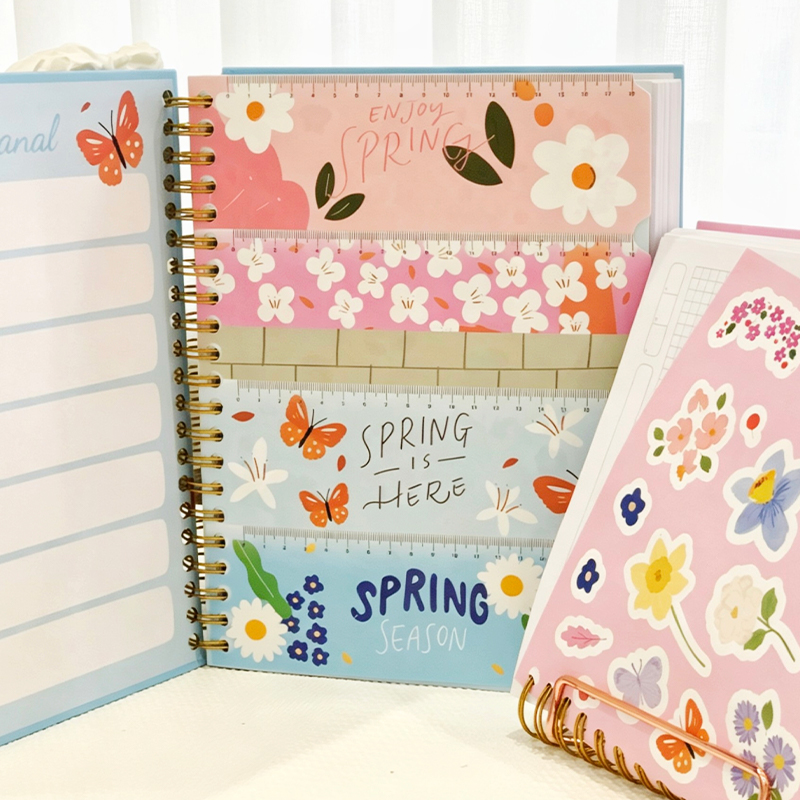 A4 Hardcover Spiral Coil Notebook with Grid and Ruled PagesThis sturdy notebook combines a rigid cover, spiral coil, and elastic band. It suits retail and private label use, with flexible page layouts and customization for bulk orders.View Product →
Frequently Asked Questions
Can you edit a spiral-bound document?
Technically yes, but it is tedious. The coil has to be rotated out of every hole, pages added or removed, and the coil threaded back. If you know pages will change, comb binding is the better workflow.
Which binding lays flatter?
Both lie flat at 180 degrees. Spiral goes further: pages rotate a full 360 degrees, so a planner can be folded back or held open with one hand. Comb binding stops at 180 degrees because the spine will not flex beyond it.
Is comb binding cheaper than spiral binding?
Generally yes for materials alone. Plastic combs cost less than coils, and a manual comb punch is less expensive than a coil inserter. At manufacturing scale the gap narrows, and the higher retail value of a spiral notebook often makes it the better product.
Which binding is more durable?
Spiral. A continuous coil has no individual teeth to snap, and the plastic used is formulated to flex repeatedly. Comb binding is fine for careful office use, but it does not tolerate drops onto the bind edge or extreme cold.
What thickness can each binding handle?
Both reach roughly 400-plus sheets. Comb spines run from 6 mm to 51 mm; spiral coils run from 6 mm to 50 mm. For anything much thicker, look at screw-post or custom book binding.
Do comb and spiral require different hole punches?
Yes. Comb binding uses rectangular slots in a 19-hole pattern on Letter size, 21 on A4. Spiral binding uses round holes at a 3:1 or 4:1 pitch. The punches are not interchangeable.
Reference Sources
- Binding equipment manufacturer product specifications
- Industry standard punch pattern and pitch documentation
- Common paper weight and sheet thickness reference data
 Previous