


 English
 Español
 عربى
عربى

There is no single way to sort notebooks into types, because "notebook type" can mean binding method, intended use, size, cover material, or page layout, and each of those angles groups the same products differently. The breakdown below covers all six, so a spiral-bound, A5, dot-grid sketchbook and a hardcover, letter-size, lined journal both show up in more than one category at once.
By Binding and Construction
Binding method is usually the first split buyers make, since it decides how flat the pages lie, how the notebook survives daily handling, and whether pages can be added, removed, or replaced later.
Spiral / Wire-Bound
Pages and cover are punched and threaded onto a continuous wire or plastic coil, letting the notebook open completely flat or fold in half. This is the most widely stocked binding for everyday office and school notebooks because it holds up well to repeated opening. Our spiral notebooks are built on this construction.
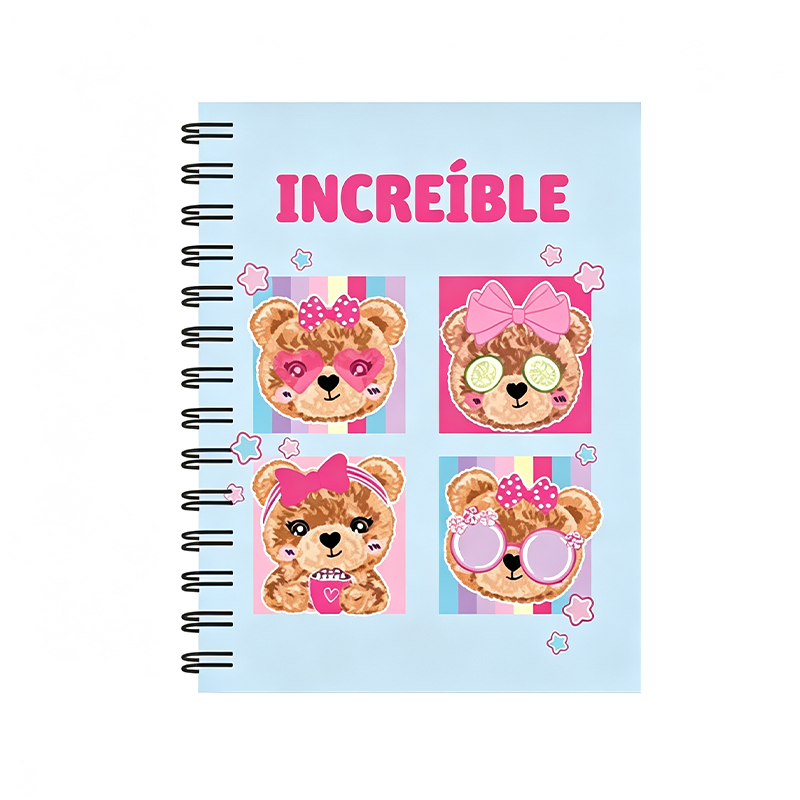 Our ProductSpiral NotebooksWire-bound notebooks that open fully flat, made for daily writing at the desk or in class. Covers, ruling, and sizes can be matched to your brand or program.View Product ->
Perfect-Bound (Softcover)
Pages are glued along a flat spine under a flexible cover, giving a clean, book-like edge but a spine that resists lying fully flat. Perfect-bound notebooks are common in bookstore-style journals where a tidy spine matters more than flat-opening pages.
Saddle-Stitched
Folded sheets are stapled through the fold line, a low-cost method common in thin notepads and promotional notebooks rather than daily-carry books. Page count stays low because the staples cannot hold a thick stack securely.
Casebound Hardcover
Signatures of folded pages are sewn or glued together and wrapped in a rigid board cover, built for notebooks that need to survive years of use. The stiff cover also protects the pages inside when the notebook is carried loose in a bag. Wrapping that board in printed paper gives the popular paper covered notebooks style.
 Our ProductPaper Covered NotebooksRigid board wrapped in printed paper, so the whole cover is open to full-color artwork. A cost-friendly route to a finished hardcover look.View Product ->
Disc-Bound
Pages are punched with a scalloped edge and snapped onto plastic discs, so individual sheets can be removed, reordered, or added without special tools. This makes disc-bound notebooks popular for planners that get rearranged through the year.
Composition-Style Sewn
Signatures are sewn through the fold and glued into a stiff, usually marbled cover, the classic school notebook construction that resists pages coming loose. The sewn construction is why these notebooks rarely shed pages even after heavy use.
By Intended Use
The same binding can show up across very different use cases, and the internal layout, page treatment, and any add-on features like tabs or pockets usually give the clearest signal of what a notebook is actually meant for.
Planners and Diaries
Pre-printed dated or undated calendar grids, weekly spreads, and goal-tracking pages built around scheduling rather than open writing. Many include monthly overviews, habit trackers, or an address section as added structure. Planners that travel daily often add an elastic band, as in our strap-closure notebooks.
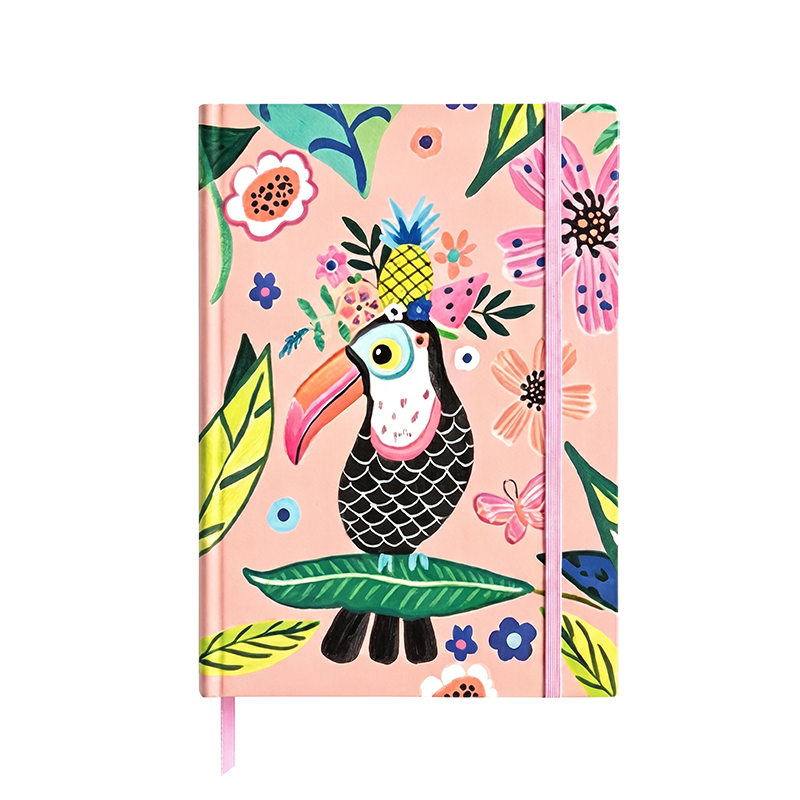 Our ProductStrap-Closure NotebooksAn elastic or fabric strap keeps the cover shut and loose inserts inside, a good fit for planners and journals carried every day.View Product ->
Journals
Blank or lightly ruled pages meant for personal reflection, gratitude logs, or long-form writing, often paired with a softer, more decorative cover. Prompted journals add printed questions or headers to guide each entry.
Sketchbooks and Art Notebooks
Heavier, uncoated blank paper meant to hold pencil, charcoal, or light watercolor without buckling or tearing under repeated erasing. Some include a toned or textured surface built specifically for a drawing medium.
Lab and Field Notebooks
Numbered pages, often with grid ruling and a carbonless duplicate sheet, used for research records or site inspections that need a traceable original. The numbering and duplicate copy support chain-of-record requirements in regulated settings.
Ledgers and Account Books
Columned pages sized for financial entries, still used in some retail and workshop settings alongside digital bookkeeping. The fixed column widths make manual totals easier to check by eye than a blank page would.
Memo Pads and Steno Pads
Small, top-bound or spiral-bound pads for quick notes, phone messages, or shorthand, sized to fit a jacket pocket or sit by a desk phone. Steno pads specifically use a narrow center rule for Gregg or Pitman shorthand columns.
By Size Format
Size is chosen around how the notebook travels, from a full desk page down to something that fits in a pocket.
| Format | Approximate Size | Common Fit |
| Oversized / A3 | 297 x 420mm | Large sketchbooks, presentation flip pads |
| Full-size / A4, Letter | 210-216 x 279-297mm | Desk notebooks, project and meeting notes |
| Mid-size / A5, B5 | 148-176 x 210-250mm | Daily journals, bag-carried planners |
| Pocket / A6 and smaller | Under 105 x 148mm | Quick notes, memo pads, travel logs |
By Cover Material
Cover material sets both the look and the durability of a notebook, and it is often the main variable buyers customize when ordering in bulk.
Printed card and PP-laminated covers dominate budget and mid-range notebooks because they print well and cost little per unit. PU, leather, and fabric covers move a notebook toward the gift and premium planner segment, where texture and perceived durability matter as much as the paper inside. Hardcover casebound covers sit between the two, adding real structural protection without the cost of full leather binding, which is why they show up so often in notebooks meant to be kept for years rather than filled and replaced.
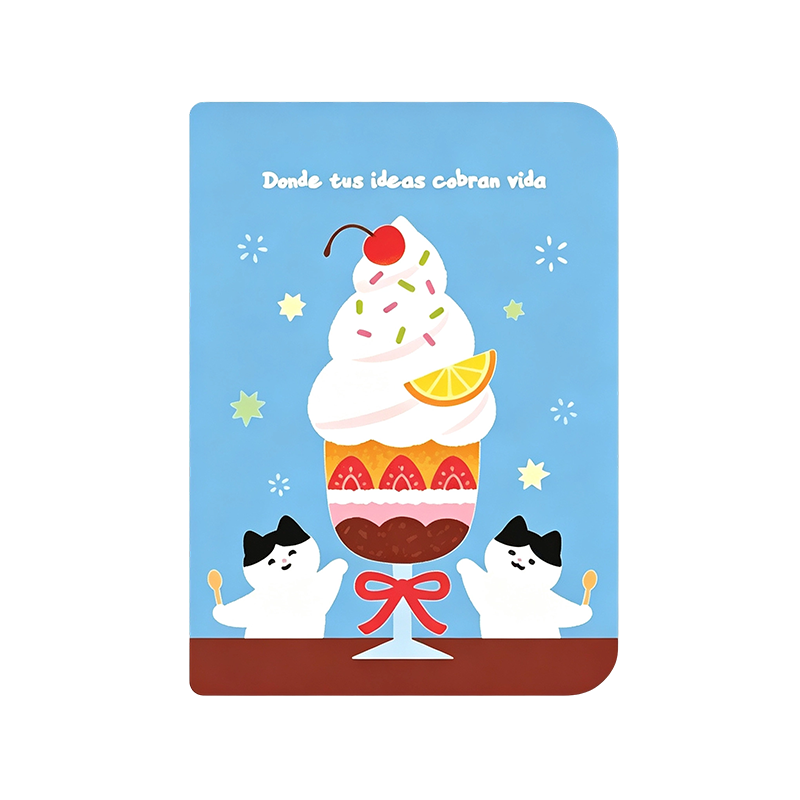 Our ProductPU Leather NotebooksA soft, grained premium cover that wipes clean and takes embossing and foil stamping well, popular for corporate gifts and branded planners.View Product ->
By Page Layout and Ruling
The printed guide lines on the page, if any, are the last major variable, and they often decide which of the categories above a notebook actually gets used for.
Lined / Ruled
Horizontal rule lines set for handwriting, the default layout for general note-taking and journaling. Line spacing itself varies by market, with college ruled and wide ruled being the two most common width standards.
Grid / Graph
Evenly spaced squares suited to diagrams, tables, and technical or engineering sketches. Grid size typically runs from 5mm down to 3mm depending on how fine the intended drawing work is.
Dot Grid
Faint dot markers that guide writing or drawing without the visual weight of solid lines, popular for bullet journaling. The light dot spacing still lines up text and simple charts while leaving the page feeling open.
Blank
No printed guide at all, left for freehand drawing, mind maps, or mixed writing and sketching. Blank pages are also common in guest books and signature books where a fixed rule would get in the way.
Specialty Ruling
Purpose-built layouts such as music staff paper, storyboard frames, or Cornell-style note columns for a specific workflow. These are printed to match one task closely rather than working as an all-purpose page.
Mixed / Sectioned
A single notebook combining ruling styles by section, such as lined pages up front and blank pages at the back. Mixed layouts let one notebook cover both structured notes and open sketching without carrying two books.
By Page Count and Structure
How the pages themselves are organized inside the cover is a category on its own, separate from binding method or ruling, and it drives a different set of search terms buyers actually type in.
Single-Subject
One continuous run of pages with no internal dividers, the simplest structure and the most common default for general note-taking.
Multi-Subject / Tabbed
Pages split into labeled sections, often with pocket dividers, letting several topics or classes share one physical notebook.
Perforated / Tear-Out
A scored edge lets individual sheets detach cleanly, useful for handing off notes or filing pages into a separate binder.
Refillable / Expandable
Disc-bound or ring-bound structures that accept extra pages or let used sections be swapped out, extending the notebook's working life.
A single notebook usually sits in one slot from each of these categories at once, and knowing all of them is what makes it possible to describe exactly what is being asked for, whether that means a disc-bound, A5, dot-grid, refillable planner or a saddle-stitched, pocket-size, single-subject memo pad.
About Yiwu Hosie Crafts Co., Ltd.
Yiwu Hosie Crafts Co., Ltd. is a professional paper product source manufacturer, specializing in customized gift paper bags, deluxe gift boxes, greeting cards, PU leather-bound notebooks, and cultural and creative notebooks. Whichever notebook type from the list above fits your project, we can develop and produce it to your specification.
Custom Development
We develop new notebooks from customer-provided drawings and samples, so the binding, cover material, size, and page layout can all be set to your brief.
Automated Production
The factory runs Heidelberg printing presses and fully automated post-press lines, taking a notebook from printing through to the finished product in one workflow.
Batch Consistency
Automated processing keeps quality steady across large runs, so repeat and high-volume orders for domestic and overseas buyers match the approved sample.
Export Experience
With strong design and development capability and a record of on-time delivery, our products ship to Asia, the Americas, and Europe for supermarkets, cultural and creative brands, jewelry, and gift packaging.
Notebook types we can customize include PU leather notebooks, paper covered notebooks, spiral notebooks, and strap-closure notebooks, along with cultural and creative notebooks built around your own artwork.
 Previous